


Coffee was born in Ethiopia — long before it became a global crop, it grew wild in the highland forests of the region, tended by generations of small farmers who still shape how it tastes today. That's where every Dalmal bag starts its journey.
Shop Our Coffee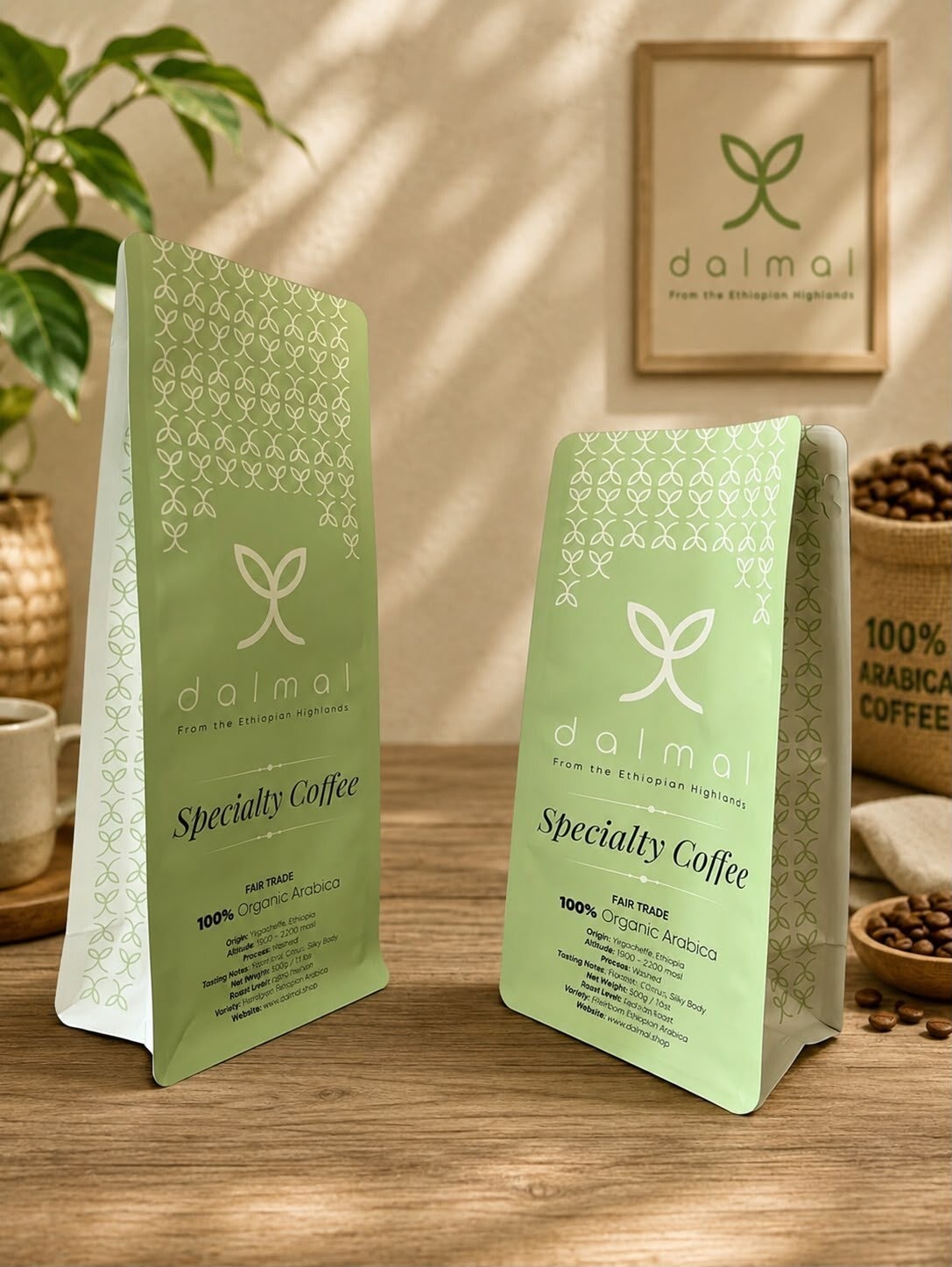
Ethiopia's highland growing regions sit at some of the highest coffee-growing elevations in the world — often 1,500 to 2,200 meters above sea level. At that altitude, coffee cherries ripen slower, developing more complex sugars and the bright, layered flavor the region is known for.
It's part of why we source from here directly, rather than through layers of middlemen that flatten out what makes a bean distinct.
Much of what grows in these highlands are heirloom varietals — genetically diverse plant populations that have adapted to this specific land over centuries, rather than the single-origin hybrids grown for yield elsewhere. Every harvest carries a little of that variation with it.
We work with growers who still farm this way, on a small enough scale that we can trace each lot back to where it came from.
Direct trade means we work as close to the source as we can — buying green coffee straight from growers and small regional collectives instead of large intermediaries. It means a fairer price reaches the people who actually grew it, and it means we can vouch for exactly where a bag came from.
It also means the beans move faster from harvest to roaster, which matters more for flavor than almost anything else we do.
Highland-grown lots are known for jasmine and citrus notes, especially in lighter roasts.
Slower ripening at altitude builds natural sugars that come through as berry and stone-fruit sweetness.
A light body with a crisp, tea-like finish — distinct from the heavier profile of lowland-grown coffee.
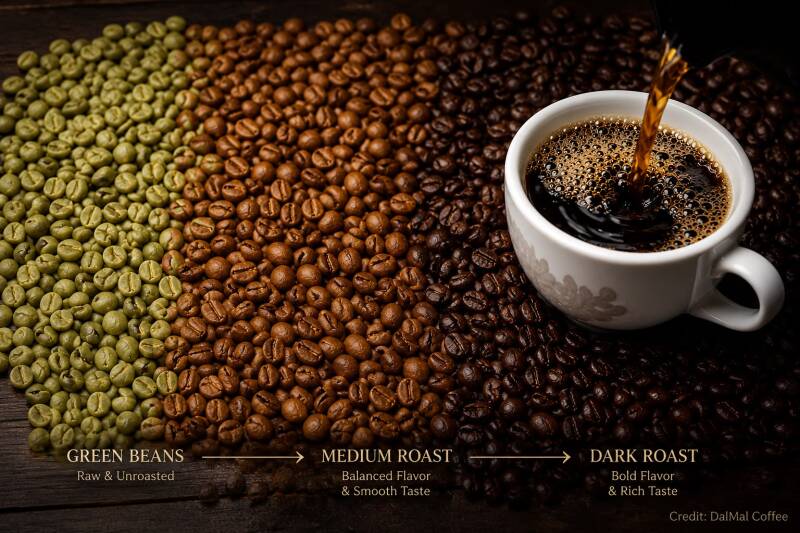
Green, roasted, or ground to your brew method — every bag traces back to the highlands you just read about.
Shop Our Coffee